Executive Summary: Prime Minister Narendra Modi’s high-profile four-day diplomatic tour to Uzbekistan and the Kyrgyz Republic marks a significant milestone in India’s Central Asia foreign policy. Focusing heavily on regional security and economic connectivity, the visit underscores New Delhi’s proactive engagement in its extended neighborhood. This comprehensive guide analyzes the geostrategic dimensions, economic imperatives, and multilateral outcomes of India’s Central Asia diplomacy.
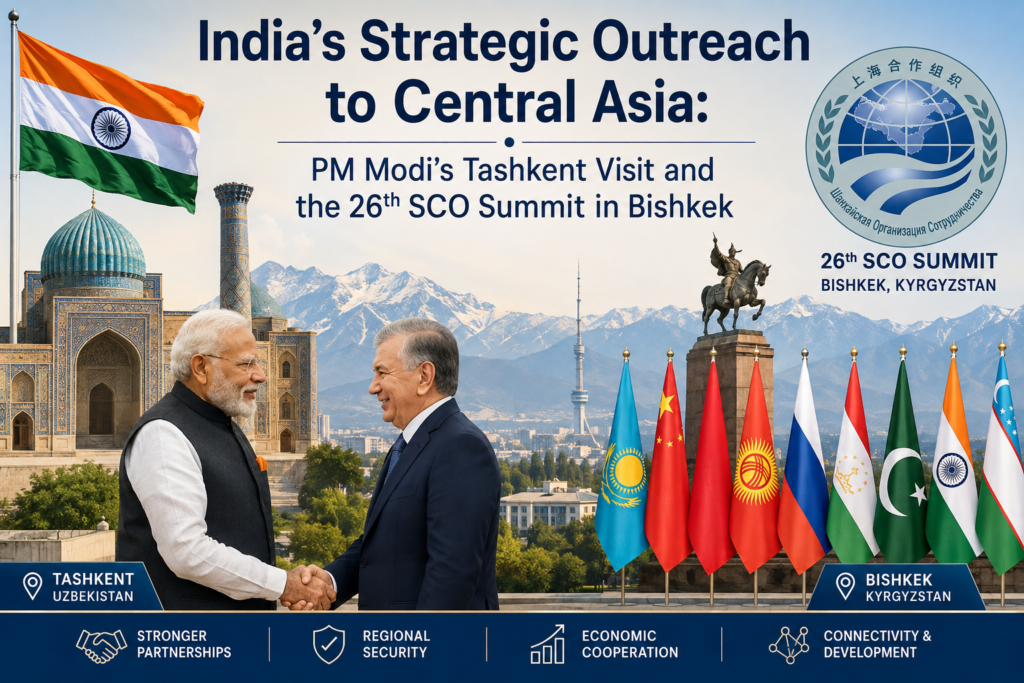
1. Geopolitical Context: Why Central Asia Matters to New Delhi
Central Asia has historically been perceived as a complex geopolitical crossroads. For India, viewing the region as part of its extended neighborhood is driven by critical imperatives:
- Countering Security Threats: Mitigating risks emanating from cross-border terrorism and regional instability.
- Resource Security: Accessing critical mineral reserves and regional natural gas reserves.
- Multipolar Diplomacy: Balancing major-power dynamics across Eurasia by maintaining strategic autonomy through India-Central Asia summits.
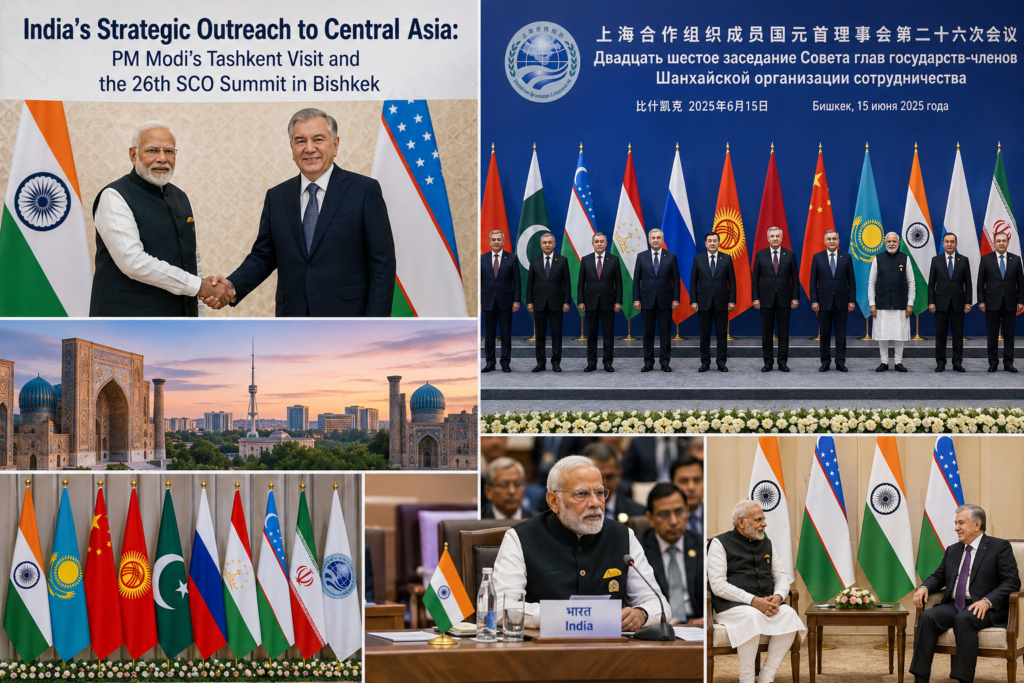
2. Bilateral Leg: Strengthening the India-Uzbekistan Strategic Partnership
The first leg of Prime Minister Modi’s tour featured an official State Visit to Tashkent. Marking Modi’s return to the Uzbek capital, the talks focused on elevating bilateral ties:
- Economic and Trade Synergy: Aligning long-term developmental frameworks, specifically connecting India’s economic vision with Uzbekistan’s modernization goals.
- Defense & Digital Integration: Expanding joint military exercises, counter-terrorism intelligence sharing, and India-Uzbekistan bilateral relations.
- Cultural Diplomacy: Honoring shared civilizational links through educational and cultural institution visits.
3. Multilateral Engagement: PM Modi at the SCO Summit in Bishkek
Transitioning from Tashkent, Prime Minister Modi arrived in Bishkek for the milestone Shanghai Cooperation Organisation (SCO) Summit. The summit served as a critical platform for India to articulate its core doctrine:
India’s ‘SECURE’ Formula at the SCO
New Delhi emphasized its foundational framework for Eurasian integration, known as PM Modi’s SECURE strategy:
- Security for citizens
- Economic development
- Connectivity routes
- Unity among member states
- Respect for sovereignty and territorial integrity
- Environmental protection
On the sidelines of the summit, high-level diplomatic interactions reinforced traditional partnerships and reviewed comprehensive regional connectivity and trade.
4. Overcoming Connectivity Bottlenecks and Future Outlook
Despite immense strategic potential, India’s economic integration with Central Asia faces persistent logistical hurdles. To bypass these barriers, India continues to champion alternative trade pathways through Central Asia economic corridors:
- International North-South Transport Corridor (INSTC): Leveraging Iran’s Chabahar Port to establish a seamless multi-modal trade route into Central Eurasia.
- Institutional Linkages: Utilizing multilateral frameworks to secure long-term energy contracts and stable trade corridors.
Ultimately, PM Modi’s Central Asia tour reaffirms New Delhi’s intent to shape a secure, interconnected, and multipolar regional architecture.
Frequently Asked Questions (FAQ)
What are the primary goals of PM Modi’s Central Asia tour?
The tour aims to deepen strategic partnerships, enhance bilateral trade and digital connectivity with Uzbekistan, and project India’s foreign policy in Central Asia at the SCO Summit in Bishkek.
Why is the Shanghai Cooperation Organisation (SCO) important for India?
The SCO provides India with a vital multilateral platform to combat regional terrorism, foster economic and energy ties across Eurasia, and engage constructively with Central Asian nations through India’s Eurasian diplomacy.
How does India address lack of direct overland access to Central Asia?
India is actively developing alternative connectivity networks, notably through the International North-South Transport Corridor (INSTC via Iran’s Chabahar port) to boost regional trade.s Chabahar port.